How to Stack Low Ticket Offers for Predictable, Compounding Growth
One low ticket funnel can change your business. But stacking multiple low ticket offers is how you build an engine that funds itself, compounds trust, and fills your high ticket pipeline without chasing, begging, or burning out on 90-minute webinars nobody watches.
The smartest operators right now are pulling in 30, 50, even 100+ buyers every single day. Not with high ticket pitches to cold traffic. Not with endless content calendars. With simple, stackable low ticket systems that get them paid while they build the trust needed to close bigger deals.
If your current model is ads to free lead magnet to sales call (and you are wondering why show-up rates and conversions keep dropping), this is the shift you need to make.
Why the Old Funnel Model Is Broken
Most businesses still run a version of this system: pay for traffic, send people to a free asset, then push them straight into a sales call for a high ticket offer.
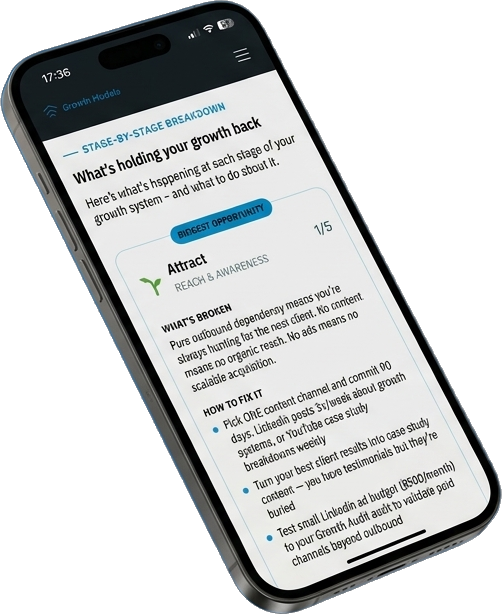
Get a free five-step strategy to grow your business more profitably
Answer a few questions about how you get and keep customers, and get a detailed report on the handful of actions that'll grow your business more profitably. Free, about five minutes.
It used to work. Getting someone on a call from a webinar used to cost around $50. Now you are looking at $300 to $700 depending on your market. And half the people who book do not even show up.
Free lead magnets are not much better. You used to get a reasonable lead for two quid. Now it is $20+ just for an email address. And freebie seekers want to stay freebie seekers. They rarely convert. Ever.
This is not a strategy. It is roulette. You are spending more to reach people who trust you less than they did two years ago. Post-AI, the noise is deafening. Attention is not the problem. Trust is.
We have moved from an attention economy to a trust economy. And the businesses that understand this are the ones pulling ahead.
The Low Ticket Offer Strategy That Actually Scales
Smart operators are flipping the funnel. Instead of asking for a massive commitment upfront, they lead with a low ticket offer. Filter for buyers early. Build the relationship. Then ascend to high ticket.
The basic system looks like this:
- Traffic (ads, organic, content, outreach, whatever you use)
- A simple low ticket offer ($1 to $47, with bumps and upsells pushing AOV to $50-$500)
- An automated trust-building sequence that pre-sells your high ticket offer
- A sales mechanism (call, application, checkout) for the main offer
Two things happen immediately. First, the revenue from step two pays off whatever you spent on step one. Your self-liquidating offer funds your acquisition. Second, the people entering your pipeline are buyers. Not freebie seekers. Buyers.
Buyers are between 12 and 56 times more likely to buy again than someone who downloaded a free PDF. They engage more. They show up to calls. They convert at dramatically higher rates.
Fewer calls, but higher show-up rates and higher close rates. That is a system you can actually scale.
How to Stack Low Ticket Offers Across Formats
One low ticket funnel is good. Stacking multiple low ticket offers is where the real compounding happens.
Here is how it works. You take your core solution (a simple fix for a painful problem) and reformat it into multiple delivery types:
- A book for people who prefer to read
- A course for people who want structured learning
- A workshop for people who want guided implementation
Same solution. Same transformation. Three different formats that appeal to three different cohorts within your audience. Some people want a book. Some people want a video course. Some people want a live experience. You are not creating three different businesses. You are creating three doors into the same one.
This mirrors the Rule of One thinking. One core offer, packaged at different entry points, all feeding the same pipeline.
Multiplying Touch Points with Angle Stacking
Formats are one axis. Marketing angles are the other.
For each format, you can lead with different angles in your marketing:
- The pain: “Tired of paying $500 per call that never converts?”
- The win: “How we get 50 buyers per day on autopilot”
- The idea: “Why the trust economy killed your webinar funnel”
Three formats times three angles gives you nine different touch points. Nine chances for someone in your audience to see your thinking, recognise their problem, and decide to hand over a dollar.
And that is exactly how trust compounds. They see the pain angle on Monday. The win angle on Wednesday. By Friday, they are thinking: “This person clearly knows what they are doing. It is only a dollar. What have I got to lose?”
This is the dollar ladder in action. Small, low-risk commitments that stack into deep trust over time.
Why Stacking Low Ticket Offers Beats Single Funnels
A single funnel gives you one shot. One angle. One format. One chance to catch someone at the right moment with the right message.
A stacked low ticket system gives you nine or more entry points. And each one is self-liquidating. Each one pays for its own traffic. Each one feeds buyers into the same trust-building sequence and the same high ticket pipeline.
The maths changes completely:
- Single funnel: 10 buyers per day, one source of acquisition
- Stacked system: 50+ buyers per day across multiple funnels, all self-funding
At a 5-10% conversion rate on your high ticket offer, 50 buyers per day means multiple high ticket clients daily. Without chasing. Without hoping. Without cold outreach that feels like begging.
They come to you pre-sold because they have already bought from you, consumed your thinking, and seen results. Even small ones.
Building Your Low Ticket Funnel Stack
Do not try to build nine funnels at once. That is the opposite of what works.
Start with one. Get it profitable. Get the offer dialled in. Get the ads self-liquidating. Get the trust sequence converting into high ticket.
Then duplicate.
Take your core offer. Reformat it. Change the angle. Launch funnel number two. Same backend, same trust sequence, same high ticket offer at the end. Just a different front door.
The process looks like this:
- Build your first low ticket offer around a simple solution to a painful problem
- Add bumps and upsells to push your average order value up (aim for the AOV to cover your ad spend)
- Wire up the trust-building sequence that nurtures buyers toward your high ticket offer
- Get funnel one self-liquidating before you touch funnel two
- Reformat the offer (book, course, workshop) and change the marketing angle (pain, win, idea)
- Launch funnel two feeding into the same backend
- Repeat
Each new funnel adds another revenue stream that pays for itself. Each one builds more trust. Each one feeds more buyers into your high ticket pipeline.
This is what a real growth system looks like when the Convert and Engage stages are working together. The front end funds the acquisition. The backend builds the relationship. The high ticket offer is the natural next step, not a cold pitch.
What This Model Is Not
This is not an endless content treadmill. You are not posting six times a day across four platforms hoping something sticks.
This is not DM outreach that feels like begging. You are not sliding into strangers’ inboxes with a pitch they never asked for.
This is not 90-minute webinars that burn you out for a 2% conversion rate.
This model pays for itself. It grows your reach. And it compounds over time because every buyer, every touch point, and every small win adds to the trust reservoir that makes your high ticket offer an easy yes.
The shift from a dollar to four thousand is not a leap of faith when you have built the ladder rung by rung.
Frequently Asked Questions About Low Ticket Offer Stacking
How many low ticket offers do I need before I start seeing results?
One. Start with a single low ticket funnel and get it self-liquidating before you stack more. Most businesses never get one funnel working properly because they spread themselves too thin. Nail one, then duplicate.
What price should I set for a low ticket offer?
The front-end price can be as low as $1. The goal is not to profit on the initial sale. Use bumps and upsells to push your average order value up to $50-$500. That revenue covers your ad costs while you build a buyer list that converts into high ticket clients.
Will low ticket buyers actually convert to high ticket offers?
Buyers are 12 to 56 times more likely to purchase again compared to freebie seekers. Once someone has paid you, consumed your thinking, and seen even small results, the trust gap for your high ticket offer shrinks dramatically. A 5-10% conversion rate from your buyer list is a realistic target.
How is this different from a traditional value ladder?
A traditional value ladder is linear: one product leads to the next. Stacking low ticket offers is about creating multiple entry points at the same level, across different formats and angles. All of them feed into the same backend trust sequence and high ticket offer. It is wider at the top, not just taller.
Do I need to create completely different products for each funnel?
No. You reformat the same core solution. A book, a course, and a workshop can all teach the same thing. The content stays the same. The packaging changes. This keeps your workload manageable while multiplying your touch points.
The Bottom Line
Straight to high ticket does not work the way it used to. Ad costs are up. Trust is down. Freebie seekers do not convert. The businesses winning right now are the ones leading with low ticket offers, stacking them across formats and angles, and building buyer-based pipelines that compound trust over time.
Stop selling information to people who do not trust you yet. Start giving them solutions at a price so low it is a no-brainer. Then build the relationship from there.
Not sure where your growth system is leaking? Take the free growth diagnostic. It maps your business against all five ACCER stages and shows you exactly where to focus first.